
Table of Contents
- What Is Dog Weight Training?
- Benefits of Dog Weight Training
- What Age Can Dogs Start Weight Training?
- Dog Weight Training Methods
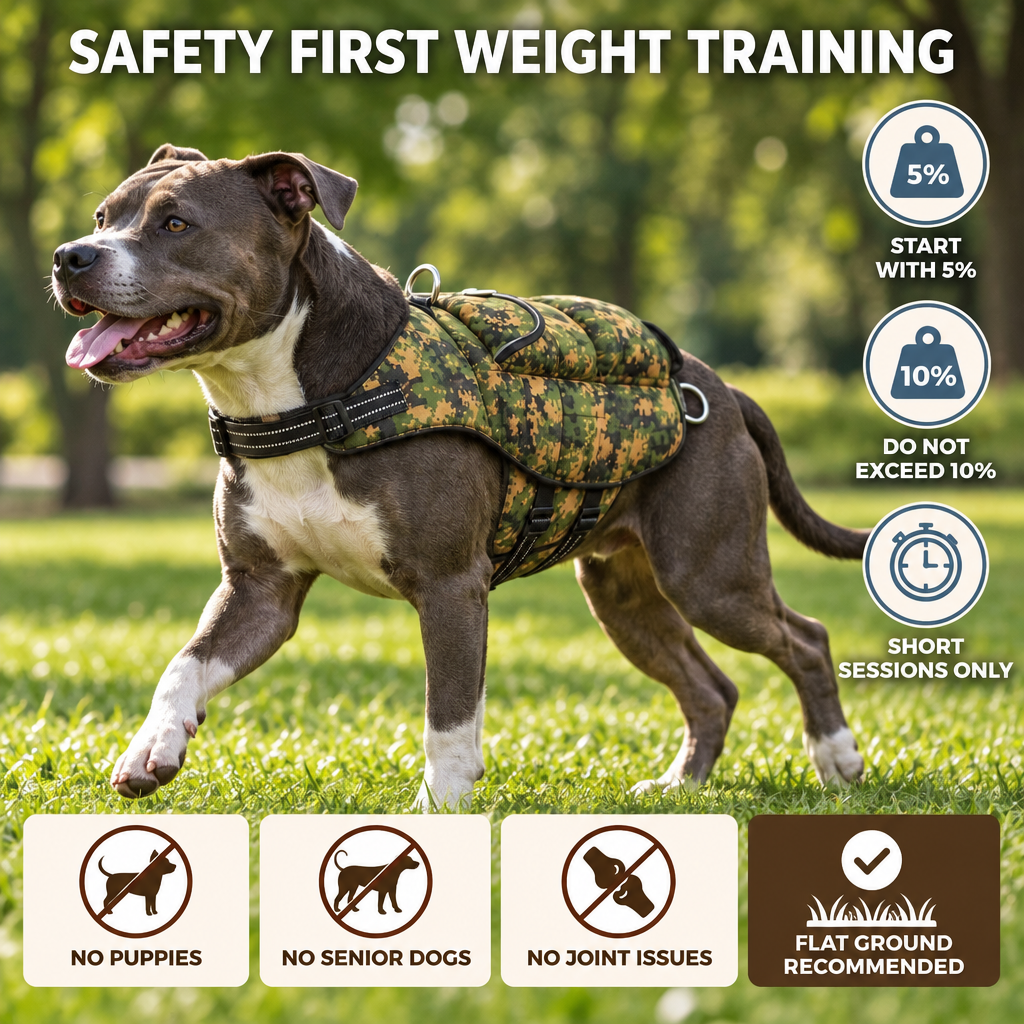
- How Much Weight Is Safe?
- Dog Weight Training Exercises You Can Do at Home
- How to Get Started
- Safety Rules
- The Best Tool for Dog Weight Training
TLDR
Dog weight training builds muscle, improves joint health, boosts cardiovascular fitness, and reduces destructive behavior. The safest and most effective method is a weighted vest that adds resistance during everyday walks and playtime. Dogs should be at least 12-18 months old before starting any resistance program. Start with 5% of your dog's bodyweight and build up gradually over weeks.
What Is Dog Weight Training?
Dog weight training is the practice of adding controlled resistance to your dog's movement to build muscle strength, improve endurance, and enhance overall physical conditioning. Just like humans use resistance training to get stronger and healthier, dogs respond to the same principles — progressive overload, consistency, and recovery.
It's not a fringe activity. The American Kennel Club (AKC) recognizes weight pulling as a legitimate canine sport, and professional trainers, breeders, and working dog handlers have used resistance training for decades. Source: AKC
The three main approaches to dog weight training are:
- Weighted vest — adds resistance during walks, runs, and play
- Weight pulling — dogs drag a weighted cart or sled
- Resistance exercises — bodyweight movements like sit-to-stands, incline work, and swimming
For most dog owners, a weighted dog vest is the most practical starting point. It requires zero special equipment or training space — you add it to your dog's existing routine and the resistance does the work.
Benefits of Dog Weight Training
1. Builds Muscle Mass and Strength
Added resistance forces muscles to work harder with every step. Over time, this produces real, visible muscle development — especially through the chest, shoulders, hindquarters, and core. For working breeds, bully breeds, and high-drive dogs, this is often the missing piece in their fitness routine.
2. Improves Joint Health
This one surprises people. Building muscle around joints — particularly the hips, knees, and elbows — provides structural support that reduces joint stress. According to the K9 Coach, weight training is one of the most effective tools for long-term joint health in dogs prone to dysplasia or arthritis.
3. Burns More Calories and Supports Weight Management
An estimated 59% of dogs in the US are overweight or obese. A weighted vest increases the metabolic demand of a standard walk by 15-25%, turning a 30-minute walk into a genuine conditioning session. No extra time required — just more output from the same activity.
4. Boosts Cardiovascular Health
Resistance during movement elevates heart rate and forces the cardiovascular system to adapt. Dogs that train consistently with added weight show improved stamina, faster recovery, and better heart and lung function over time. Source: Cain Hoy Vet
5. Reduces Destructive Behavior
A dog with excess energy and no outlet for it destroys furniture, digs holes, and barks at everything. Weight training delivers deep physical fatigue — the kind that actually satisfies a high-drive dog. According to the American Pulling Dogs Association, dogs involved in weight training show measurable improvements in focus and behavior. Source: Bully Max
6. Mental Stimulation
Physical challenge is mentally engaging. A dog wearing a weighted vest has to think about its movement, balance, and effort in a way that a plain walk doesn't require. This mental load is especially valuable for working breeds, sport dogs, and dogs prone to anxiety.
7. Enhances Bone Density
Progressive resistance training stimulates bone remodeling and increases bone mineral density — the same mechanism that makes weight training effective for osteoporosis prevention in humans. Stronger bones mean fewer fractures and better structural integrity as your dog ages.
What Age Can Dogs Start Weight Training?
Dogs should be at least 12-18 months old before starting any formal resistance training program.
Growth plates — the soft cartilage at the ends of bones — don't fully close until a dog is between 10 and 18 months old, depending on the breed. Applying resistance loads before growth plates close risks permanent skeletal damage.
As Dr. James L. Cook, DVM, PhD, Director of the Comparative Orthopaedic Laboratory at the University of Missouri explains: "You don't want to do too much too soon because the musculoskeletal system is not mature until dogs are 10 to 18 months old. Early training should focus on core-strengthening activities that promote muscle and nerve control." Source: Pheasants Forever
Guidelines by breed size:
- Small breeds (under 25 lbs): Growth plates close around 10-12 months
- Medium breeds (25-60 lbs): Growth plates close around 12-14 months
- Large breeds (60-100 lbs): Growth plates close around 14-18 months
- Giant breeds (100+ lbs): Growth plates close around 18-24 months
When in doubt, get a vet clearance before starting. A quick X-ray can confirm growth plate closure.
Dog Weight Training Methods
Weighted Vest Training
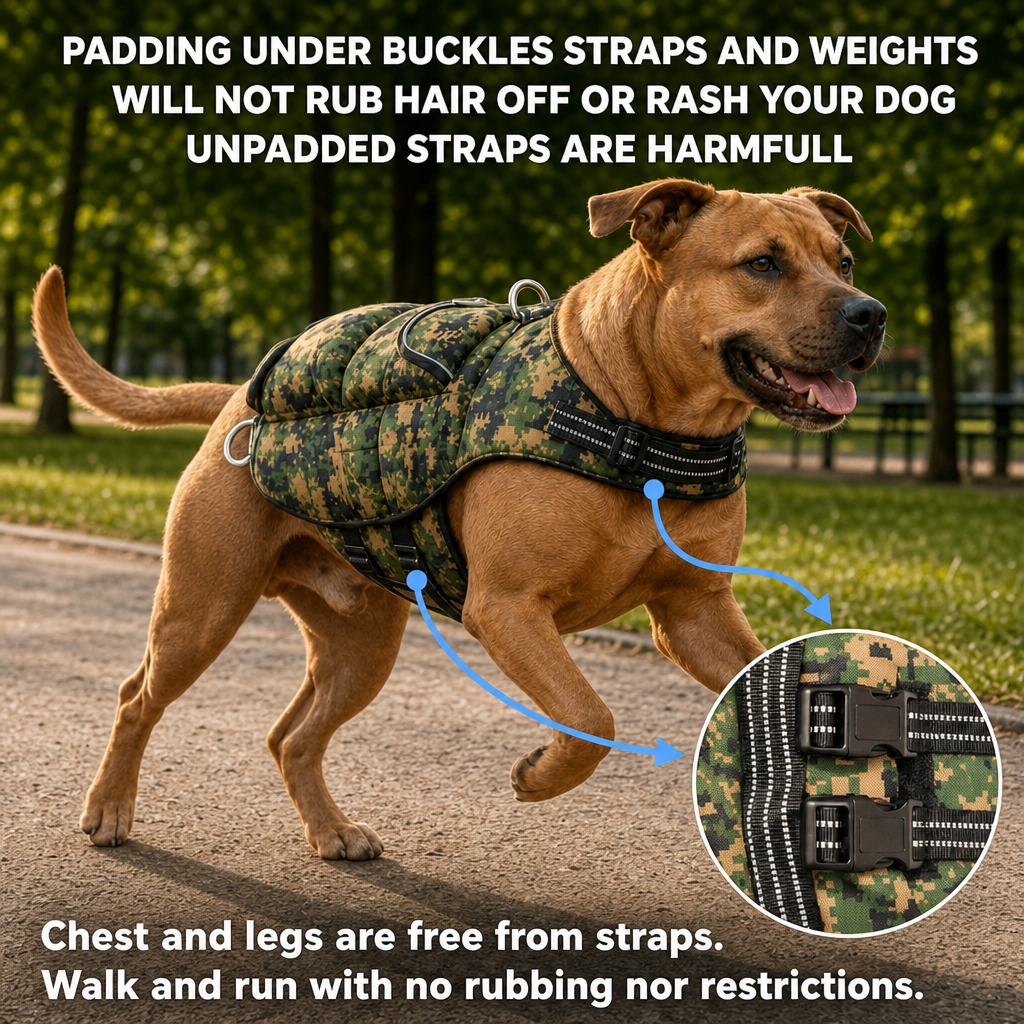
A weighted dog vest is the most accessible and safest entry point into dog weight training. The vest distributes resistance evenly across the dog's torso during normal movement — walks, runs, play, swimming, pulling. There's no learning curve for the dog, no special facility required, and no risk of the dog straining against an external load.
The Canine Weight Set® 3-in-1 Weighted Vest takes this further with a patented design that combines a weighted vest, floatation support, and pulling attachment in one system. The vest uses adjustable sandbags that let you start light and add resistance progressively as your dog gets stronger — the same progressive overload principle that drives human athletic development.
Weight Pulling
Weight pulling is a competitive canine sport where dogs drag a weighted cart or sled down a 16-foot track. It's recognized by the United Kennel Club and has a strong community of breeders and trainers. Dogs are fitted with a pulling harness, and weights are added incrementally. The sport builds explosive strength and drive, and it's particularly popular with bully breeds, Rottweilers, and working dogs. Source: Bully Max
Resistance Swimming
Swimming with a weighted vest provides low-impact resistance training that's ideal for dogs recovering from injury or dogs with joint issues. The water supports body weight while the vest adds resistance to every stroke. This is one of the best conditioning methods for dogs that can't handle high-impact exercise.
Hill and Incline Work
Walking or running on inclines naturally increases the resistance on your dog's hindquarters and core. Combine incline work with a weighted vest and you have one of the most effective strength protocols available without any special equipment.
How Much Weight Is Safe?
Start at 5% of your dog's bodyweight. Never exceed 10-15% for conditioned dogs.
| Dog Weight | Starting Load | Max Load (conditioned) |
|---|---|---|
| 20 lbs | 1 lb | 2-3 lbs |
| 40 lbs | 2 lbs | 4-6 lbs |
| 60 lbs | 3 lbs | 6-9 lbs |
| 80 lbs | 4 lbs | 8-12 lbs |
| 100 lbs | 5 lbs | 10-15 lbs |
The Canine Weight Set® vest includes sandbag weights and recommends starting with a single weight in the center front pocket for the first 2 days. After 5-7 days, add one weight to the rear pocket. Continue adding weight in small increments every 5-7 days as your dog adapts.
Signs you've added too much weight too fast:
- Shortened stride or gait changes
- Reluctance to move or sit down after activity
- Excessive panting beyond normal exercise fatigue
- Lameness or favoring a limb
If you see any of these, reduce the load immediately and give your dog 48 hours of rest.
Dog Weight Training Exercises You Can Do at Home
1. Weighted Walks
The foundation of any dog weight training program. Put on the vest at 5% bodyweight and walk your normal route. The resistance handles everything. Progress by adding weight gradually, not by adding distance or speed.
2. Sit-to-Stands
Have your dog alternate between sitting and standing on command, 10-15 reps. This targets the hindquarters and core — the same muscles targeted by squats in human training. Add a weighted vest once your dog performs the movement cleanly. Source: Vital Vet
3. Incline Walking
Find a hill, parking garage ramp, or any consistent incline. Walk up and back 3-5 times. The incline shifts more work to the hindquarters and core. Combined with a vest, this produces significant strength gains in 4-6 weeks.
4. Resistance Swimming
If your dog swims, add the vest. Even a 10-minute swim session with added resistance builds functional strength, cardiovascular endurance, and mental toughness without any joint impact.
5. Tug Work with a Vest
Tug-of-war while wearing a weighted vest turns a play session into a full-body resistance workout. The dog engages its neck, shoulders, chest, core, and rear end simultaneously. Keep sessions short — 5-10 minutes — and let your dog win regularly to maintain drive.
6. Weighted Pulling
Attach the pulling strap from a 3-in-1 vest to a light weighted object (a tire, a sled, a drag bag). Start with minimal resistance and build gradually. The dog learns to lean into the pull, engaging its entire posterior chain. This is the most direct form of canine strength training available.
How to Get Started
Week 1-2: Introduce the vest with zero weight. Let your dog wear it around the house and on walks so it becomes normal gear.
Week 3: Add one sandbag weight (approximately 5% of bodyweight). Walk normally for 20-30 minutes daily.
Week 4-6: If your dog shows no signs of fatigue or discomfort, add a second weight. Monitor gait and energy levels.
Week 6+: Continue adding weight in small increments every 5-7 days. Check in with your vet every 4-6 weeks if your dog is older or has any joint history.
The key metric is your dog's gait. If it changes — if the stride shortens, if the dog starts favoring a side, if movement looks labored — you've gone too far too fast. Back off and rebuild.
Safety Rules
- Always get vet clearance before starting a resistance program, especially for dogs over 5 years old or breeds prone to joint issues.
- Never use a weighted vest on a dog under 12-18 months old. Growth plates must be closed first.
- Start lighter than you think you need to. The first two weeks should feel almost too easy.
- Rest days matter. Dogs need 48 hours of recovery between intense resistance sessions, just like human athletes.
- Watch for overheating. Resistance increases body temperature faster. Train in cooler conditions, keep sessions shorter in heat, and always have water available.
- Inspect the vest regularly. Check that weight bags are secure and evenly distributed before every session.
The Best Tool for Dog Weight Training
The Canine Weight Set® 3-in-1 Weighted Vest is the most complete resistance training system available for dogs. Unlike basic weighted vests that only add mass, the Canine Weight Set® combines three functions in one patented design:
- Weight: Adjustable sandbag pockets for progressive resistance
- Float: Built-in floatation support for water therapy and swimming
- Pull: Integrated pulling attachment for drag training and resistance work
The vest comes with sandbag weights included, reflective material for low-light safety, an airflow design to prevent overheating, and an ergonomic fit that reduces anxiety through gentle pressure.
It's the only vest on the market that covers every dimension of dog weight training in a single system. Available in Small through XLarge for dogs from 20 to 140+ lbs.
Shop the Canine Weight Set® 3-in-1 Vest →
Conclusion
Dog weight training delivers real, measurable results — stronger muscles, healthier joints, better cardiovascular fitness, and calmer behavior. Start with a quality weighted vest at 5% of your dog's bodyweight, add resistance gradually over weeks, and stay consistent. The dogs that get the most out of weight training are the ones whose owners commit to the process and track progress over months, not days.
Your dog is built for more than walks around the block. Start the program, stay patient, and watch the results compound.

Leave a comment
This site is protected by hCaptcha and the hCaptcha Privacy Policy and Terms of Service apply.